Top 10 Glass Bottle Caps Types You Should Know About?
When it comes to preserving the freshness of beverages, glass bottle caps play a crucial role. There are many types of glass bottle caps available today, each designed for specific purposes. Understanding these caps is essential for consumers, makers, and even collectors.
From metal crowns to flip-top caps, each type serves unique functions, impacting accessibility and storage. Some options may feel convenient but may not seal tightly. This could lead to spoilage or loss of flavor. Moreover, the aesthetics of glass bottle caps can also enhance the appeal of the product. Yet, finding the right cap for your needs can be challenging.
Choosing the wrong cap might result in wasted products or unwanted spills. A careful selection process can save both money and frustration. Dive into the world of glass bottle caps, and discover the top ten types you should know about. Be prepared to rethink how you view these small yet significant components of packaging.
Types of Glass Bottle Caps: An Introduction to Their Uses
When it comes to glass bottle caps, variety is essential. Each type serves a specific purpose. For instance, crown caps are popular in beverage bottling. They form a tight seal and are reusable. According to industry reports, these caps account for over 50% of the market share in beverage packaging.
Another common type is the screw cap. This option allows easy access while ensuring a secure seal. Data show that screw caps are gaining popularity, especially for wines and spirits. They are well-liked for their convenience and effective sealing ability. However, some consumers prefer the traditional cork for wine. The cork provides a classic feel, yet it has its drawbacks. Cork can dry out or introduce unwanted flavors.
Plastic caps are also common. They are lightweight and cost-effective. Reports suggest that their usage is on the rise, especially in the food sector. Nevertheless, environmental concerns follow plastic usage. Many brands are exploring sustainable alternatives. Glass and metal caps are becoming more favored as eco-friendly options despite their higher cost. These shifts indicate an evolving landscape in the bottle cap industry, reflecting both consumer preferences and environmental considerations.
Screw Caps: Advantages and Popularity in Modern Bottling
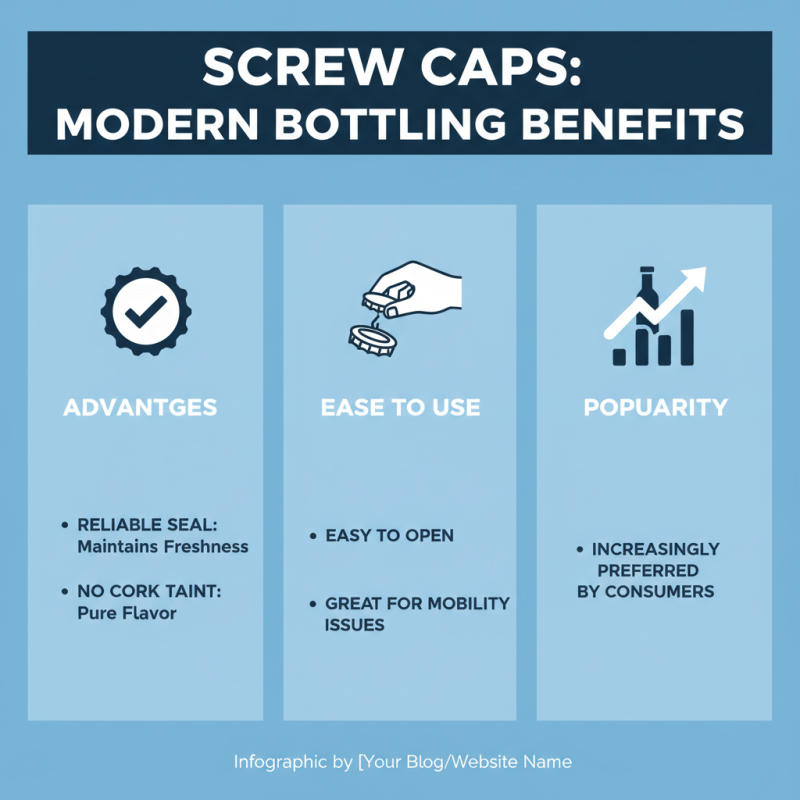
Screw caps have gained immense popularity in modern bottling. They offer a reliable seal, maintaining the freshness of beverages. Many consumers appreciate the ease of opening, especially if they have mobility issues. Unlike traditional corks, screw caps eliminate the risk of cork taint, ensuring the drink remains pure.
One notable advantage is the consistency in sealing. Each screw cap is designed to fit perfectly, preventing any leaks. Yet, not everyone is a fan. Some argue that screw caps lack the traditional elegance of cork closures. This perception can impact the way a product is viewed in upscale markets. People sometimes yearn for the ritual of uncorking a bottle.
While screw caps are practical, their environmental impact deserves attention. Many are made from non-biodegradable materials. As consumers, we must reflect on this choice. The convenience of screw caps should not overshadow the need for sustainable practices. Balancing ease of use with environmental responsibility is a challenge we face in today's market.
Cork Caps: Traditional Closure Method for Wine and Spirits
Cork caps are a traditional closure method for wines and spirits. They add a unique charm and character to the bottle. Made from natural cork, they allow for minimal oxygen exchange. This is important for aging wines. However, cork can sometimes be unpredictable. Some bottles may have cork taint, affecting the taste.
When choosing cork caps, consider the source of the cork. High-quality cork can make a significant difference. Some corks ensure a tighter seal than others. This can help prevent spills or oxidation. Look for well-aged cork to enhance your wine experience.
Tips: Always store your wine bottles horizontally. This keeps the cork moist and prevents it from drying out. If the cork dries, it loses its seal. Also, be mindful of temperature. Extreme heat can damage the wine, even with a good cork. Regularly check your stored bottles for any signs of cork issues.
Flip-Top Caps: Convenience and Functionality in Beverage Packaging
Flip-top caps have gained popularity in beverage packaging due to their practicality and user-friendly design. A report by MarketWatch indicates that the global beverage caps market is expected to grow significantly, with flip-top caps leading this trend. Their design allows for easy opening and resealing, which appeals to consumers seeking convenience. These caps often incorporate a hinged design that minimizes spills and mess, enhancing the overall drinking experience.
However, there are challenges with flip-top caps. Quality control is crucial. If not manufactured correctly, they may not seal properly, leading to reduced shelf life. Surveys show that nearly 30% of consumers have encountered issues with cap performance, impacting their perception of product quality. Additionally, environmental concerns arise. Many flip-top caps are made from plastic, raising questions about sustainability. As companies push for greener solutions, the industry must innovate to address these challenges.
Consumer preferences are changing. A growing number now seek eco-friendly packaging options. Half of surveyed individuals stated they would choose more sustainable packaging over cheaper alternatives. Companies face pressure to balance functionality with environmental responsibility. The flip-top cap remains a practical solution. Yet, the focus must shift towards developing sustainable materials. This balance could ultimately define the future of beverage packaging.
Customizable Caps: Branding Opportunities for Glass Bottles
Customizable caps for glass bottles offer significant branding opportunities. These caps do not just seal the contents; they also convey a message. A unique cap design can attract attention on crowded shelves. Brands can use distinctive colors, shapes, and textures. This gives them a chance to stand out in a competitive market.
Different materials can be considered when creating caps. Options include metal, plastic, and cork. Each material provides a different aesthetic and functionality. For example, metal caps can give a vintage look. Corks often suggest a more organic theme. However, brands must ensure that the cap complements the bottle's design. This relationship is crucial for an appealing presentation.
Exploring printing options can further enhance branding. Custom logos, slogans, or artwork can be added directly onto caps. However, this also raises some challenges. The design must be visible and legible. A cluttered cap can confuse customers. Crafting an ideal balance between design and function takes time. Reflection on previous designs can reveal valuable lessons for future projects.
Top 10 Glass Bottle Caps Types You Should Know About
| Cap Type |
Material |
Sealing Mechanism |
Customization Options |
Common Uses |
| Crown Caps |
Metal |
Twist-off |
Print on cap |
Beer, sodas |
| Screw Caps |
Plastic, Aluminum |
Screw-on |
Color printing |
Juices, oils |
| Swing Top Caps |
Ceramic, Glass |
mechanical seal |
Custom colors |
Craft beer, kombucha |
| Plastic Caps |
Plastic |
Snap-on |
Labeling |
Soda, water |
| Flip Top Caps |
Plastic |
Hinge |
Printing |
Sauces, dressings |
| Tamper-Evident Caps |
Plastic, Aluminum |
Seal |
Custom logos |
Pharmaceuticals |
| Dropper Caps |
Plastic |
Dropper |
Silk screening |
Essentials oils |
| Spout Caps |
Plastic |
Push-pull |
Graphics |
Condiments |
| Seal Caps |
Plastic |
Seal |
Color options |
Vinegars |